








A road map to inner peace
Dr. Thomas Bernagozzi has created the mindfulness project, Mindful.Latemar, in Obereggen, where he regularly shares unique meditative moments with his guests at the heart of imposing natural scenery. However, it is also possible to enjoy these moments independently too - in both summer and winter - with the help of an app.
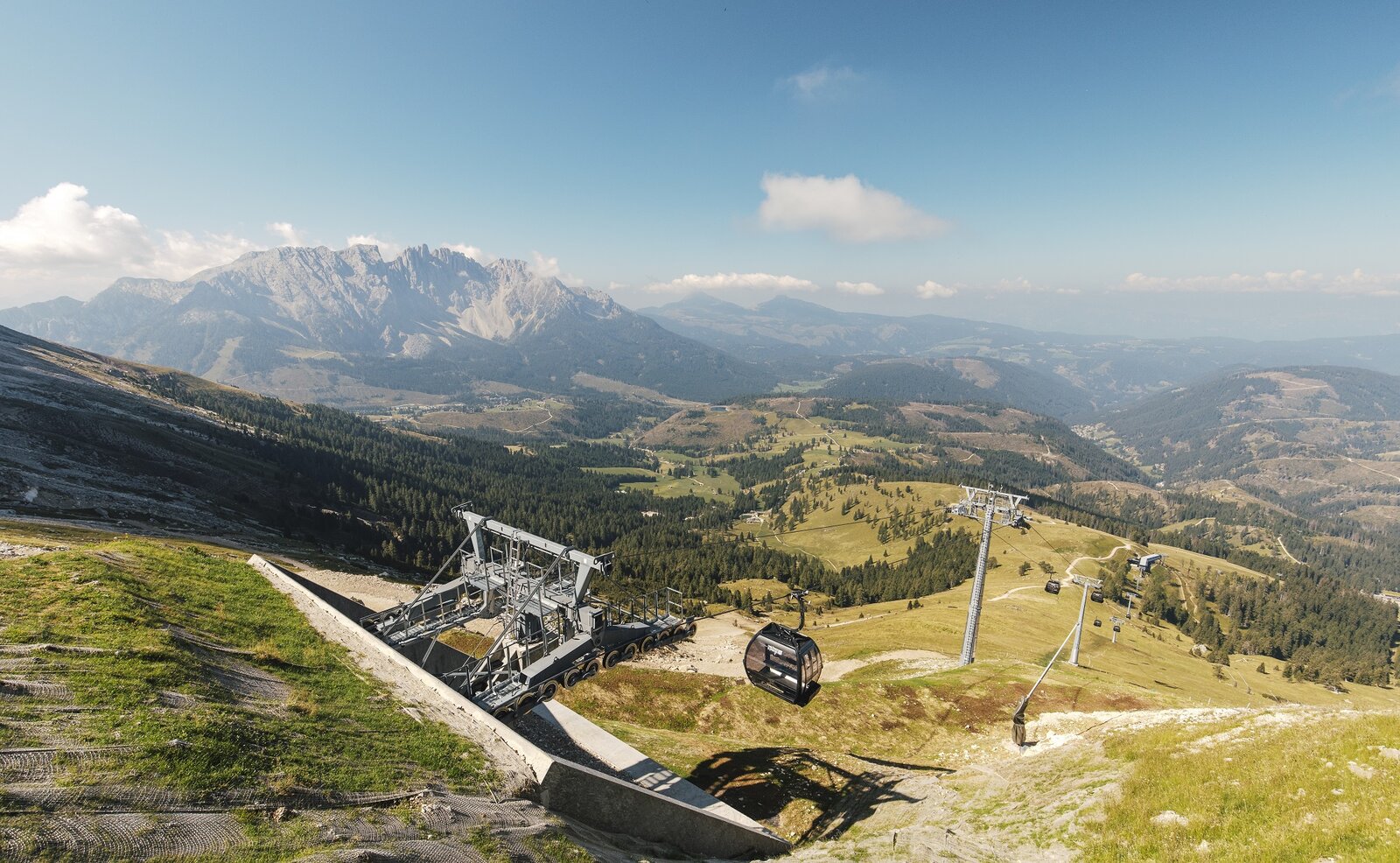
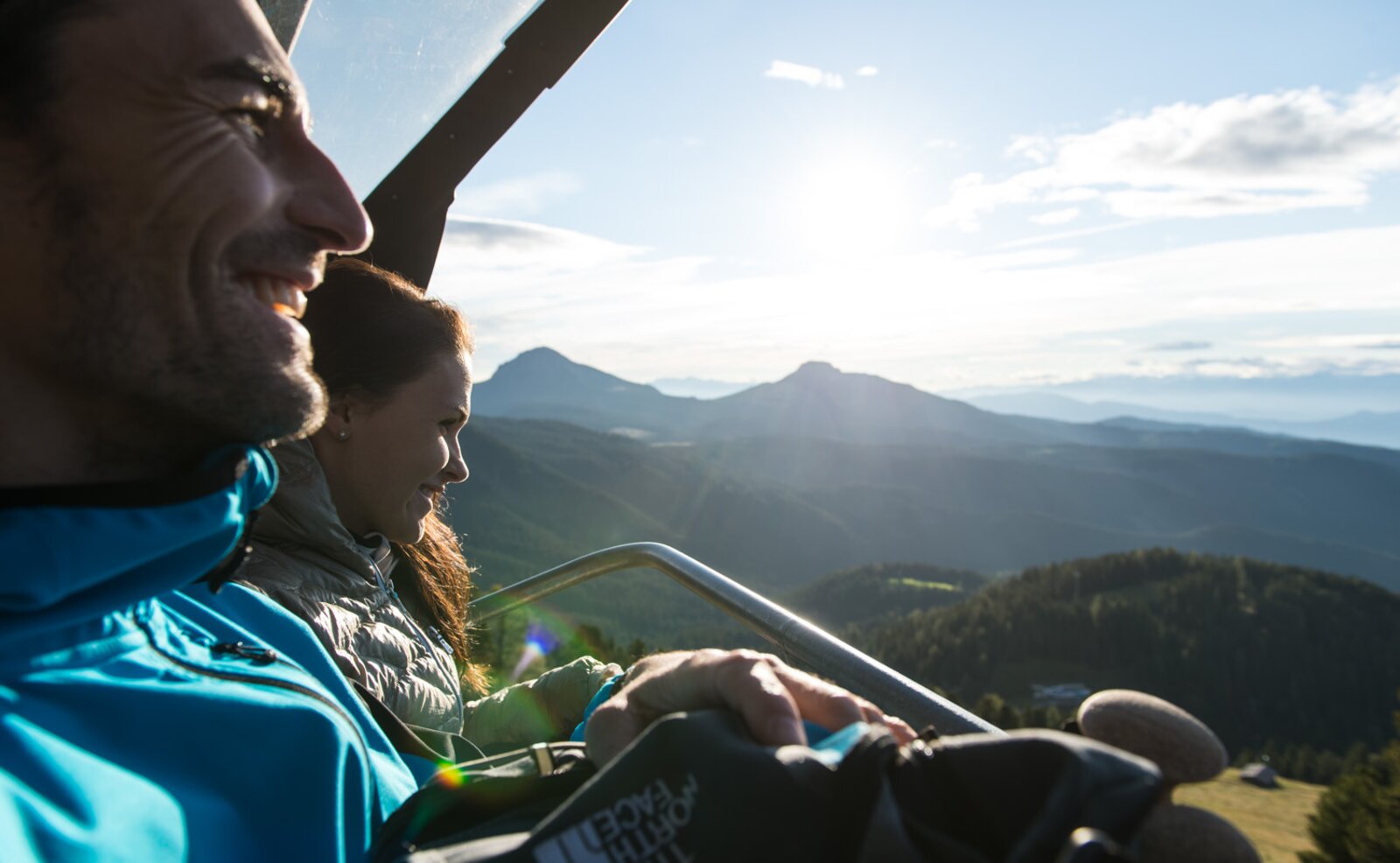
It is as quiet as a mouse on the Golfrion, the elevated ground overlooking the mountain station of the Obereggen Ochsenweide gondola, before a clear, resonant sound interrupts the silence. “How are you all?” Dr. Thomas Bernagozzi asks the four women and two men who are standing on wooden pedestals facing the Latemar and, with their eyes closed, enjoying the feel of the gentle breeze caressing their faces. With the two halves of his cymbals, he breaks their concentration and reflects upon their emotions with them.
When Thomas walks the Mindful.Latemar circular trail with his guests and takes them on a profound journey, such uniquely meditative moments just happen – precisely the kind that he believes are especially important. “Because we only have an influence on our lives in the present moments,” says the psychologist from Bolzano, who, as a certified mindfulness trainer, has developed a course up here with 18 stages that is one of a kind.


The idea to do so actually came about by chance, when Dr. Bernagozzi and the marketing manager of the Obereggen lift company, Thomas Ondertoller, sat together in Berghütte Oberholz to plan a sunset meditation event. They talked about Bernagozzi’s meditation projects in the parks of Milan and quickly came to feel that what worked in the big city could also be of interest to people up here set against the spectacular backdrop of the Latemar.
As they looked at the view from Berghütte Oberholz on the Golfrion, they devised an initial joint plan. They decided that this place, where in October 2018 the terrible storm Vaia uprooted almost every single tree, should be turned into somewhere that symbolised the resilience and rebirth of nature and where anyone who wanted to experience it mindfully could be offered the chance to slow down. Dr. Bernagozzi would become the face of the project, with his scientific background and experience as a psychologist.


“We can come together with the sounds and smells of nature and find ourselves in this magnificent Dolomites landscape”
As a result, he set about developing the Mindful.Latemar circular trail so that it could be walked in both summer and winter. So that it could be walked with him or independently with the help of an app. And in such a way that nature and meditation could interact in the simplest way possible.
“Originally, I wanted to study medicine,” recalls Thomas, but he gave that plan up and instead decided, at a young age, to travel and see the world. After first experiencing meditation in Australia, he opted to study psychology and discovered the concept of mindfulness. After completing his education, he undertook further studies as a mindfulness trainer, which for him also meant spending one week a month for a whole year in absolute silence. Without communication, without a mobile phone, only looking inside himself. It was worthwhile, says Thomas today. The best part about it is that he is able to work with people who consciously seek to do something for themselves: “As a doctor, I would have had to work with medications, as a psychologist I can work with the mind and the soul.”
Thomas and his guests find new ways of enjoying the opportunities offered by the beauty of nature here on the Golfrion every single time. “Meditating in nature is easy,” he says, while his quiet and natural manner always helps him to find a way to connect with people: “We can come together with the sounds and smells of nature and find ourselves in this magnificent Dolomites landscape.” Before passing through the steel Mindful.Latemar gateway, he asks every participant to choose a stone for themselves, to pick it up and take it with them. At the stages along the way, which were created in collaboration with the Faculty of Design and Art at the Free University of Bolzano, Thomas invites participants to meditate, which he initiates with a clash of his cymbals.


“Only when you accept your situation can you change and reinvent yourself”
In so doing, Thomas makes use of the themes and feelings that nature suggests to him. He speaks about the wind up here, the air that everyone needs to breathe. He leads them to a tree, the only one for miles around that was able to survive Storm Vaia. Badly scarred though it may be, today it stands as a symbol of change and the possibility of a new beginning. “Only when you accept your situation can you change and reinvent yourself,” he says turning his gaze to the two horses in the tree’s cool shade. Thomas shows us how despite the immense destruction all around new life is emerging and picks the wild-growing raspberries that can suddenly ripen in the light from the sun. Taking nature as a role model, learning from her, feeling how good she is for us is what Thomas aims to convey to his participants in his unassuming and calm way. Everyone, he says, can find themselves and centre themselves here. “If we manage to integrate something of this in our everyday lives and take it home from holiday with us, then we have achieved a lot,” says the psychologist. For him, mindfulness means understanding that "we are all connected.” Switching off autopilot, being aware of our actions and their consequences, “offers the amazing opportunity of bringing more kindness and love into our lives.”

At the end of a walk of almost two hours along the Mindful.Latemar trail, Thomas stops at the final stage. Everyone has to put down the stone that they chose at the beginning before heading back down into the valley on the gondola. Wishes and thoughts are written on a chalk board. Once again, it is silent, with everyone looking inwards, reflecting on their experiences and feelings. A Jeep drives up the track from the valley. It is a long way away and quite quiet, in fact it can scarcely be heard. But it nevertheless disrupts the mindful silence up here. Thomas says, “When we feel our centre, our brain realises that this is not a natural sound.”


